(AP) – Nomad Tsering Angchuk vows to stay put in his remote village in India’s Ladakh region.
His two sons and most of his fellow villagers have migrated to a nearby urban settlement but Angchuk is determined to herd his flock of fine cashmere-producing goats in the treeless Kharnak village, a hauntingly beautiful but unforgiving, cold mountainous desert.
The 47-year-old herds 800 sheep and goats and a flock of 50 Himalayan yaks in Kharnak. In 2013, he migrated to Kharnakling, an urban settlement in the outskirts of a regional town called Leh but returned a year later, not because his old home had become any better, he said, “but because the urban centers are getting worse and there are only menial jobs for people like us.”
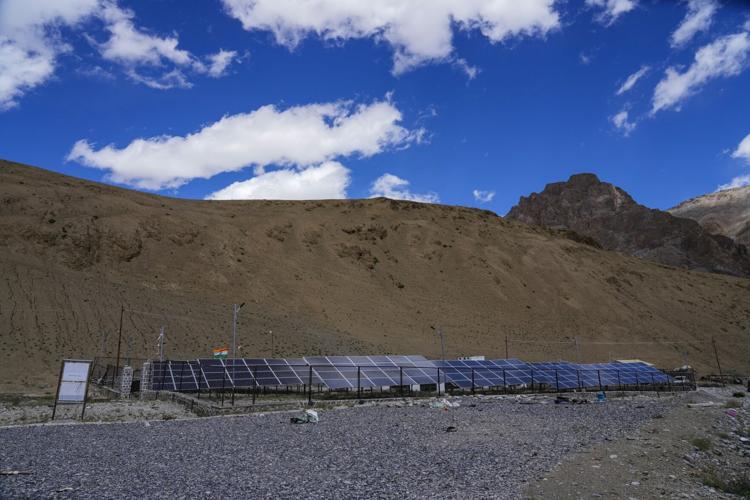
Nestled between India, Pakistan and China, Ladakh has faced both territorial disputes and the stark effects of climate change. The region’s sparsely populated villages have witnessed shifting weather patterns that have already altered people’s lives through floods, landslides and droughts.
Thousands of Ladakh nomads, known for their unique lifestyle in one of the most hostile landscapes in the world have been at the heart of these changes, compounded by border conflict and shrinking grazing land. The changes have forced hundreds to migrate to mainly urban settlements, while others work to make it a more habitable place.
Angchuk’s sons didn’t return – they don’t want to be shepherds, he said – and settled in Leh. One became a construction contractor and the other works at a travel agency, part of the region’s burgeoning tourism industry.
With 300-plus days of sunshine, the desert is in the rain shadows of the Himalayas and receives only about 4 inches (100 millimeters) of precipitation annually.
At an altitude of 15,000 feet (4,750 meters), temperatures can fall to minus 35 Celsius (minus 31 degrees Fahrenheit) during long winter months. But it’s getting hotter.
There is no word for mosquito in the local Ladakhi language, but the region has lots of these insects now, said Sonam Wangchuk, an engineer working on solutions for sustainability at his Himalayan Institute of Alternative Ladakh.
“These are all coming with the viability of climate for them,” he said. Ladakh’s thousands of glaciers, which help give the rugged region its title as one of the water towers of the world, are receding at an alarming rate, threatening the water supply of millions of people. “This year we had an unprecedented melting of glaciers,” said Prof. Shakil Romshoo, a leading glaciologist and earth scientist.